
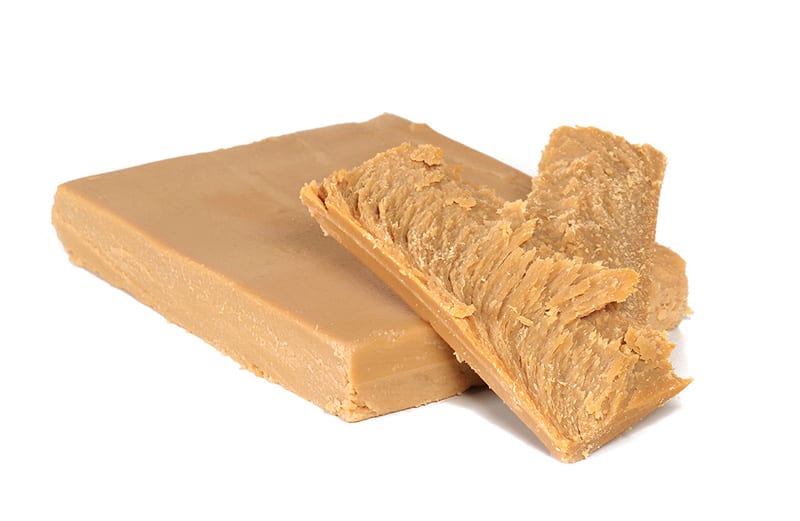
Using an extruder from Three-Tec, a research team from the University of Massachusetts has shown that the direct introduction of nitrogen gas in the extrusion process can specifically improve the texture of plant-based meat alternatives.
The characteristic textural properties of different types of meat, such as bite, juiciness or fibrousness, are difficult to replicate with plant proteins. High-moisture extrusion is one of the most important technologies for the production of fibrous, anisotropic meat substitutes. However, the process typically produces dense, barely porous extrudates that tend to have a tough texture and make it difficult to absorb flavors and colors. The study by Dr. Lutz Grossmann and his research team at the University of Massachusetts investigated whether a targeted introduction of nitrogen gas directly into the extrusion process can improve the texture.
A ZE 12 co-rotating twin-screw extruder from Three-Tec was used. The starting material was soy protein concentrate (66.1 % protein) with a water content of 65 % in the end product. Nitrogen gas was introduced at volume flows of 0 to 40 ml/min via injection ports specially manufactured by Three-Tec. Two injection positions in the extruder barrel were investigated: the middle area (barrel 3, 100 °C) and the end area (barrel 4, 120 °C).
As the gas volume flow increased, the density of the extrudates fell by up to 14.8 %. The porosity increased in the middle area from 2.1 % to 9.4 %, in the end area even to 15.3 %. Larger and more irregular pores occurred preferentially when injecting in the end area due to the higher temperature. Hardness and chewability decreased significantly with increasing gas flow. At the same time, the extrudates became lighter in color and optically more fibrous. The elastic anisotropy index increased from 1.35 (without gas) to a maximum of 1.70 with a gas flow of 5 ml/min in the middle range.
In combination with targeted nitrogen gas injection, the extruder enables precise control of the texture, porosity and fibrousness of plant-based high-moisture extrudates. The gas volume flow has the strongest influence, while the injection position modulates the pore size and the visual fiber structure. Optimal tenderness is achieved at a gas-to-flow ratio of 0.79 %, while the highest anisotropy is achieved at 0.098 %. By adjusting both parameters, different types of meat can be better imitated. In addition, the increased porosity opens up possibilities for post-processing: porous structures absorb marinades, flavors and colorants more efficiently.
| «Table-top extruders are an indispensable tool in research. The customized solutions from Three-Tec offer us the flexibility to work with both novel raw materials and innovative technologies.» Dr. Lutz Grossmann, Department of Food Science, University of Massachusetts |
Here you can find the complete paper «Tailoring anisotropy and tenderness in high-moisture extruded plant protein structures by in-line microfoaming». Further information on Food Extrusion can be found in our Data sheet extract.